GPT-6 Luna Tested on a Real Board Deck
Fifteen cents for a board deck is remarkable. What it buys is a summary of what happened, not an explanation of why.
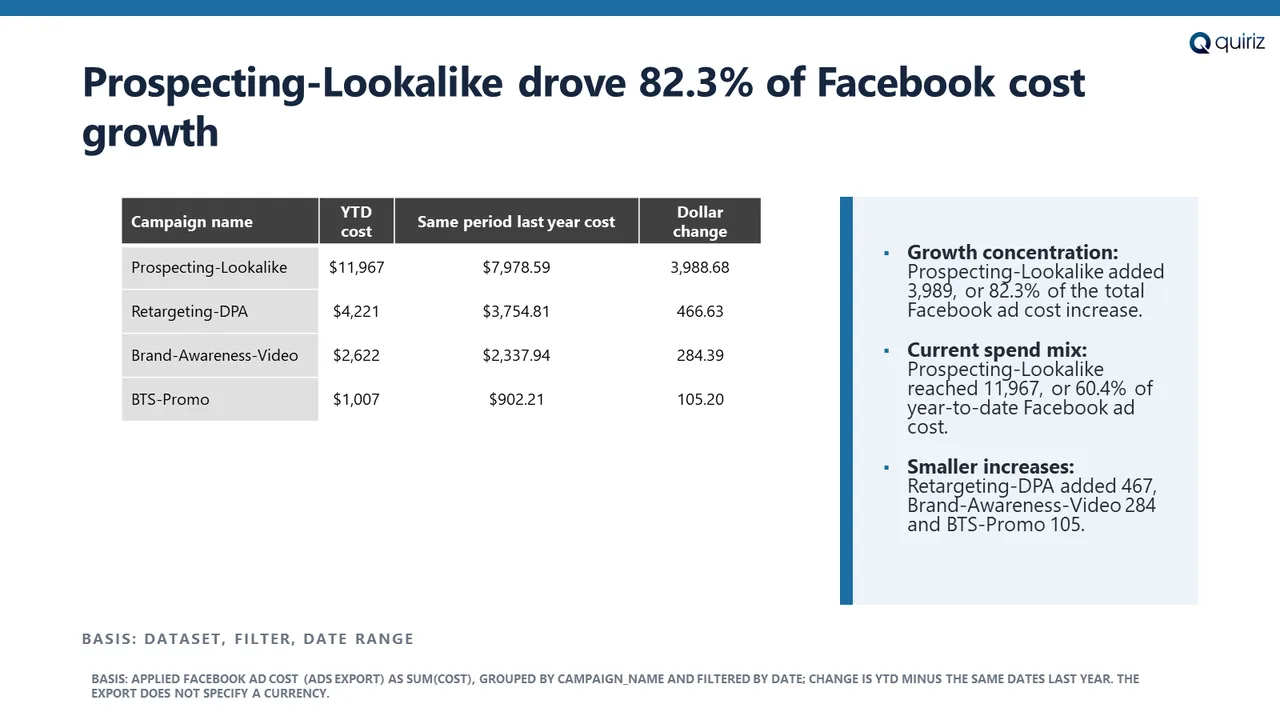
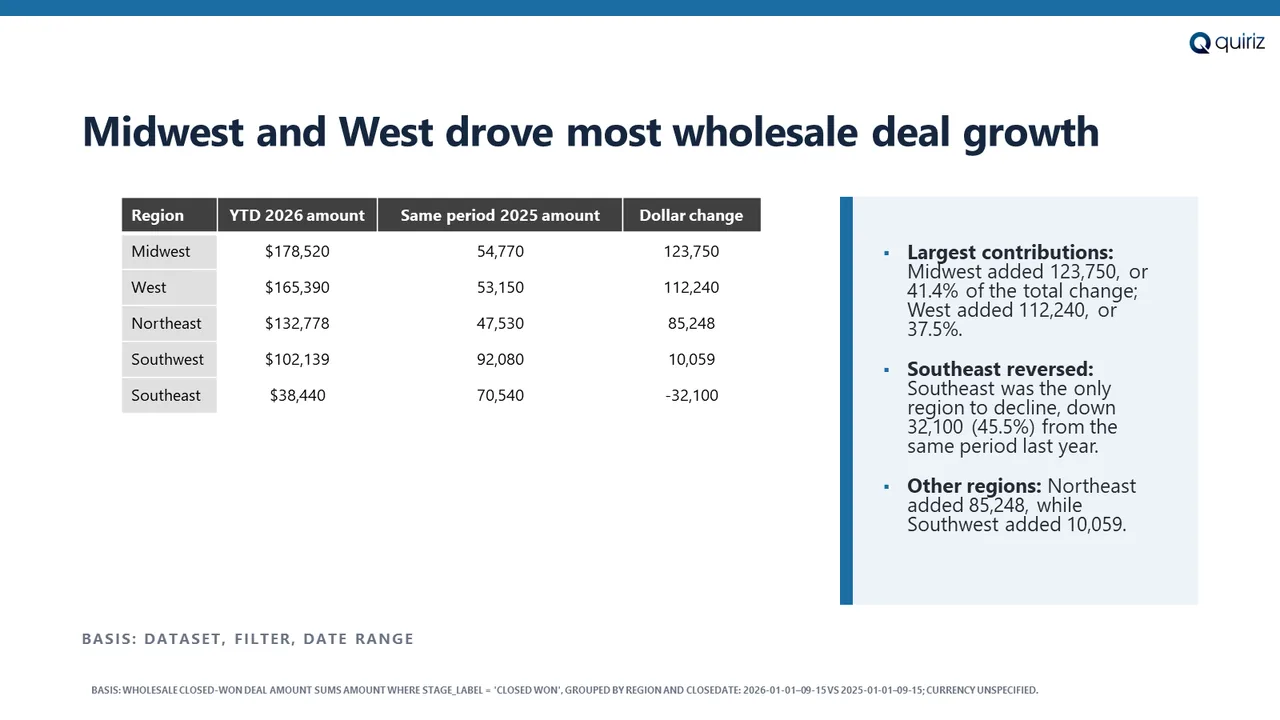
GPT-6 Luna built an 11-slide board review for 15 cents, the cheapest of seven models, in 8.6 minutes. It is a clean summary of where the ad money went and which regions grew. It did not look at campaign returns or at why the Southeast fell, and recommended putting more effort into the regions already growing. It found 1 of 8 story points in our checklist.
The run
| Billed cost | $0.15 ($0.11 answers, 1 cent writing and critique) |
| Build time | 8.6 minutes |
| Analysis calls | 47, reading 1.7 million input tokens |
| Slides | 11 content slides |
| Stories found | 1 of 8 (see the checklist) |
What it covered
- A KPI row of Google spend, Meta spend, wholesale won amount and deals won.
- Where the added ad money went: PMax-Retarget took $3,601 (61.2%) of Google’s rise, and Prospecting-Lookalike $3,989 (82.3%) of Meta’s.
- Regional growth year over year: the Midwest up $123,750, the West $112,240, and the Southeast the only region down, by $32,100.
What it left out
- Returns. The deck shows where the ad money went but not what it earned, so it does not show that Prospecting-Lookalike was returning less than it cost by June.
- Why the Southeast fell. It reports the decline but never looks at win rate or loss reasons, so it misses that the Southeast closed 4 of 20 deals, mostly lost on price.
Its recommendation
One choice, laid out as two options with what each gets and gives up: put existing sales effort on the Midwest and the West, or on Southeast recovery. It recommends the first because those regions grew most. The growing regions already win about half their deals; the Southeast, losing four in five, is the larger opportunity.
Verdict
Luna is a remarkable price for a “what happened” summary. It is not an analyst. For 15 more cents, DeepSeek V4.1 Flash found the ad problem. For 14 times the price, GPT-6.1 Sol adds careful efficiency analysis but still leaves the Southeast out.
More from this test
- All models, one board deck: the full results
- What an AI board deck really costs, by model and by step
- DeepSeek V4.1 Flash · GPT-6.1 Sol · GPT-6 Luna · Gemini 3.8 Flash
- GPT-6 Luna vs Sol · DeepSeek vs GPT-6.1 Sol
Build a board deck from your own data
Describe the deck in PowerPoint and see the source of every figure. Free to start.
Try Quiriz free →