Gemini 3.8 Flash Tested on a Real Board Deck
“Flash” suggests fast and cheap. On a multi-step analysis job it was neither the fastest nor the cheapest, and its deck covers the figures more than the stories behind them.
Gemini 3.8 Flash built a 10-slide board review for $1.47 in 13.8 minutes, the slowest of the seven models that finished. It covers the headline figures broadly: wholesale wins, Google campaigns, Meta audiences and placements. It did not follow the two biggest stories in the data, and found 1 of 8 story points in our checklist.
The run
| Billed cost | $1.47 ($1.18 answers, $0.12 writing and critique, $0.06 plan) |
| Build time | 13.8 minutes (slowest of seven) |
| Analysis calls | 59, reading 2.7 million input tokens |
| Slides | 10 content slides |
| Stories found | 1 of 8 (see the checklist) |
What it covered
- A KPI row of Google Ads spend, Meta spend, wholesale won amount and deals won.
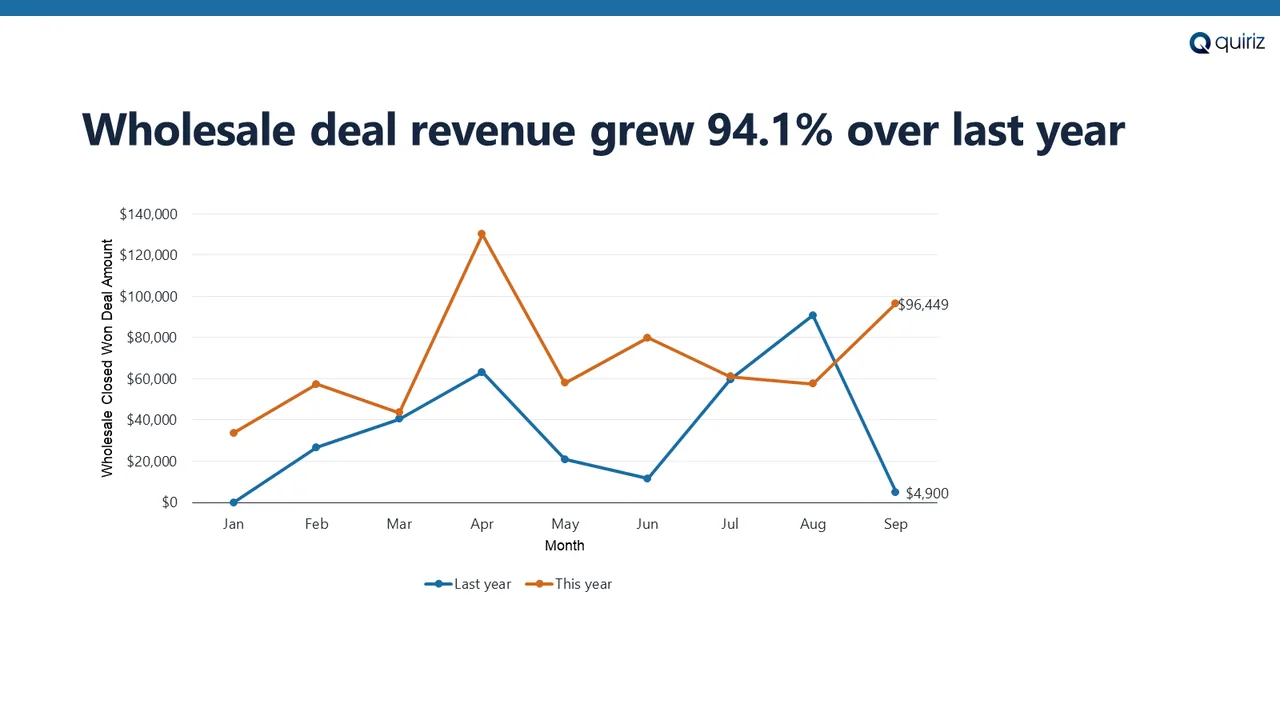
- Wholesale won amount up 94.1% on last year, month by month.
- Brand-Search as the biggest source of Google conversion value, about 42% of the total.
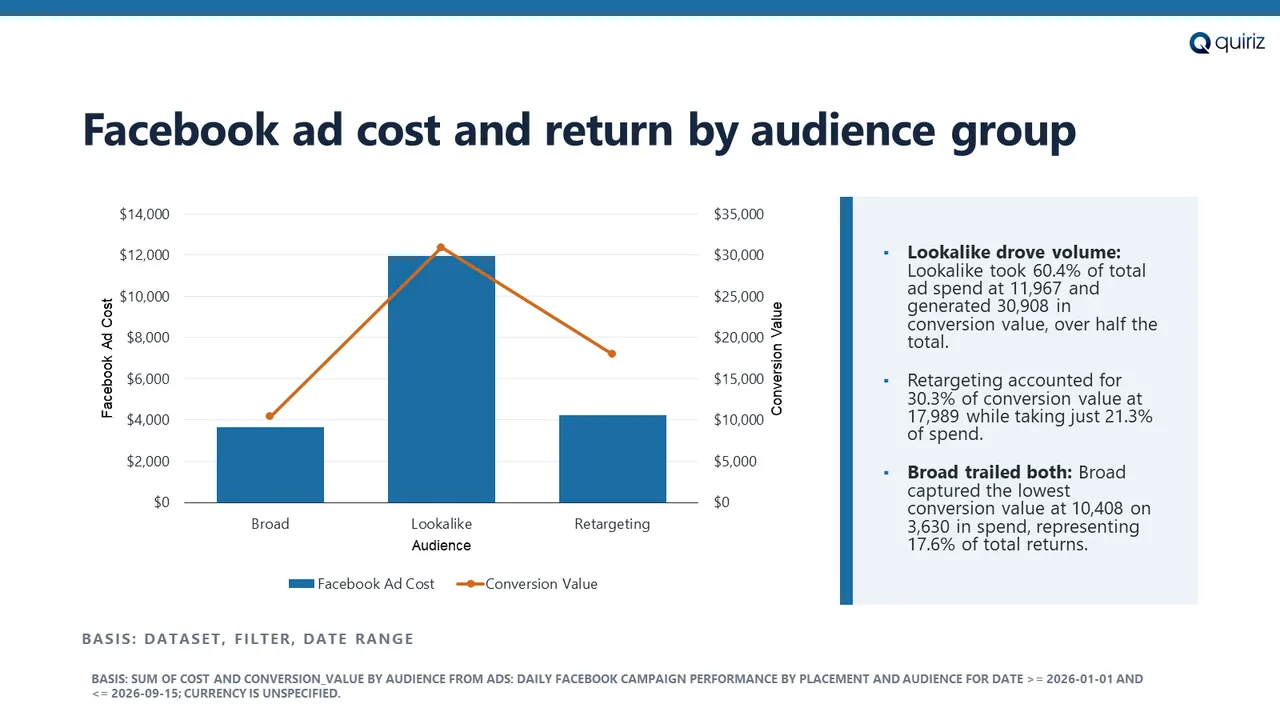
- Retargeting-DPA returning $17,989 in conversion value on $4,221 of Meta spend, and Stories as the strongest placement.
- The Southeast as the region lagging the rest.
What it left out
- The Meta prospecting decline. From May, Prospecting-Lookalike returned less than $2 per $1 spent, and in June less than $1. The deck covers its spend but not that decline.
- Why the Southeast lags. Its win rate fell to 20% while every other region held above 50%, mostly on price. The deck shows the region behind, but not the reason.
Its recommendations
Four: sales coverage on the Midwest and the West, search budget on Brand-Search, and more Meta retargeting. All four back what is already working. None addresses the prospecting campaign or the Southeast, which is where the money is.
Why “Flash” was slow
Each answer is a small loop of queries. Flash took more rounds per question than any other model, and wrote 50,000 tokens in its answers against Sol’s 8,000. Fast calls, many of them. If speed matters, measure the task, not the token rate.
Verdict
Good for a quick tour of the numbers, light for a board deck. For about twice the price, Gemini 4 Argon found 6 of 8 story points on the same job; for a fifth of the price, DeepSeek V4.1 Flash found the ad problem.
More from this test
- All models, one board deck: the full results
- What an AI board deck really costs, by model and by step
- DeepSeek V4.1 Flash · GPT-6.1 Sol · GPT-6 Luna · Gemini 3.8 Flash
- GPT-6 Luna vs Sol · DeepSeek vs GPT-6.1 Sol
Build a board deck from your own data
Describe the deck in PowerPoint and see the source of any figure. Free to start.
Try Quiriz free →