Is DeepSeek Better Than ChatGPT’s Models? DeepSeek V4.1 vs GPT-6.1 Sol
Not the apps, the models: the same board deck, the same data and the same pipeline, with only the model changed. One cost seven times as much as the other, and found less.
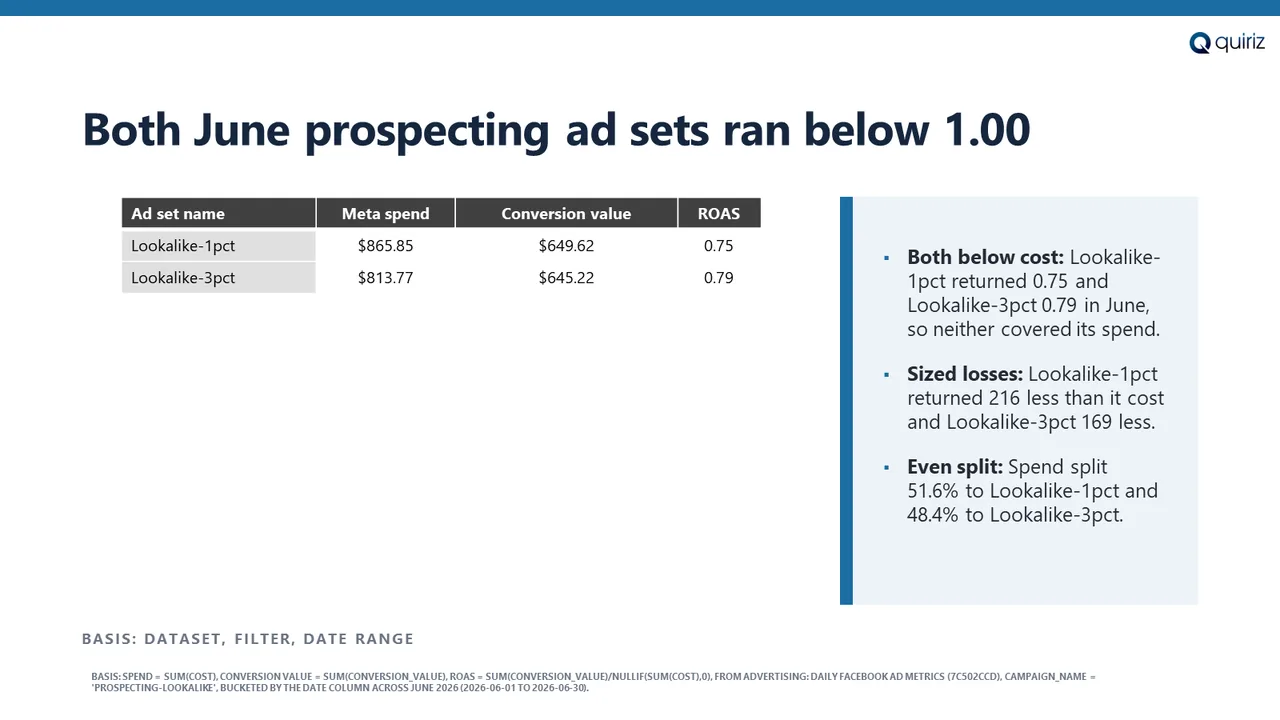
On the same board deck, DeepSeek V4.1 Flash cost 30 cents and GPT-6.1 Sol $2.08. DeepSeek went deeper: it found Meta prospecting losing money by June, and made sharper recommendations. Sol was faster and the most careful with its labels. DeepSeek found 5 of 8 story points in our checklist, Sol 3. We tested the models, not the ChatGPT app.
At a glance
| DeepSeek V4.1 Flash | GPT-6.1 Sol | |
|---|---|---|
| Billed cost | $0.30 | $2.08 |
| Build time | 8.2 min | 5.4 min |
| Analysis calls | 67 | 33 |
| Content slides | 14 | 11 |
| Stories found | 5 of 8 | 3 of 8 |
| Meta prospecting | Below 1.00 in June, $385 lost | Cost up 50%, conversions flat |
| Southeast | Fewest wins | Not covered |
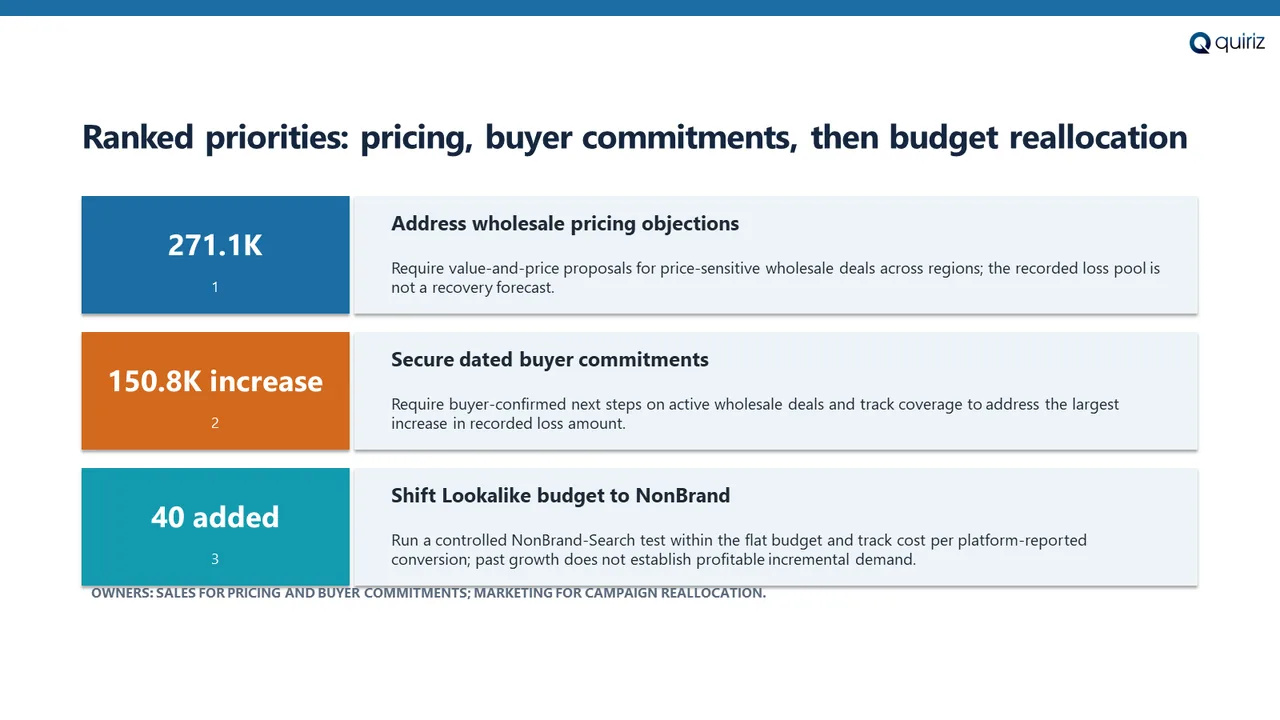
| Price as a loss driver | Not singled out | The top loss pool overall |
| Recommendations | Cut prospecting, fund Brand-Search, shift to retargeting, re-point the Southeast | Pricing, buyer commitments, a NonBrand test |
Where DeepSeek won
It found the problem. Both models saw Prospecting-Lookalike take most of the added Meta spend. Sol stopped at “cost up 50%, conversions flat”. DeepSeek followed the return month by month and drilled into June, where both Lookalike ad sets returned less than they cost. That turns “less efficient” into “losing money”, and its first recommendation, cut it in October, follows. It also put sales coverage on the Southeast, where Sol saw nothing to act on.
Where Sol won
Speed and care. Sol finished in 5.4 minutes against 8.2, labeled every ad figure as platform-reported, said what the data could not answer, and ranked loss reasons year over year, which showed pricing as the largest pool of lost value.
Why the price gap is 7x, not 13x
Sol’s list price is about 13 times DeepSeek’s per input token. DeepSeek took 67 analysis calls to Sol’s 33 and read twice the tokens, and caching discounted both bills. More in what an AI board deck really costs.
Verdict
For a monthly deck, DeepSeek V4.1 Flash is the better buy: it finds more, for less. If speed and cautious wording matter most, Sol is the pick. On this test, Claude Opus 5.5 was the only model that found the ad story, the Southeast story and the price behind it.
More from this test
- All models, one board deck: the full results
- What an AI board deck really costs, by model and by step
- DeepSeek V4.1 Flash · GPT-6.1 Sol · GPT-6 Luna · Gemini 3.8 Flash
- GPT-6 Luna vs Sol · DeepSeek vs GPT-6.1 Sol
Run the same deck on your own data
Describe the deck in PowerPoint and see the source of every figure. Free to start.
Try Quiriz free →