DeepSeek V4.1 Flash Tested on a Real Board Deck
The second-cheapest model in the test produced the best ad analysis of all six decks, and recommendations a marketing lead could act on the next morning.
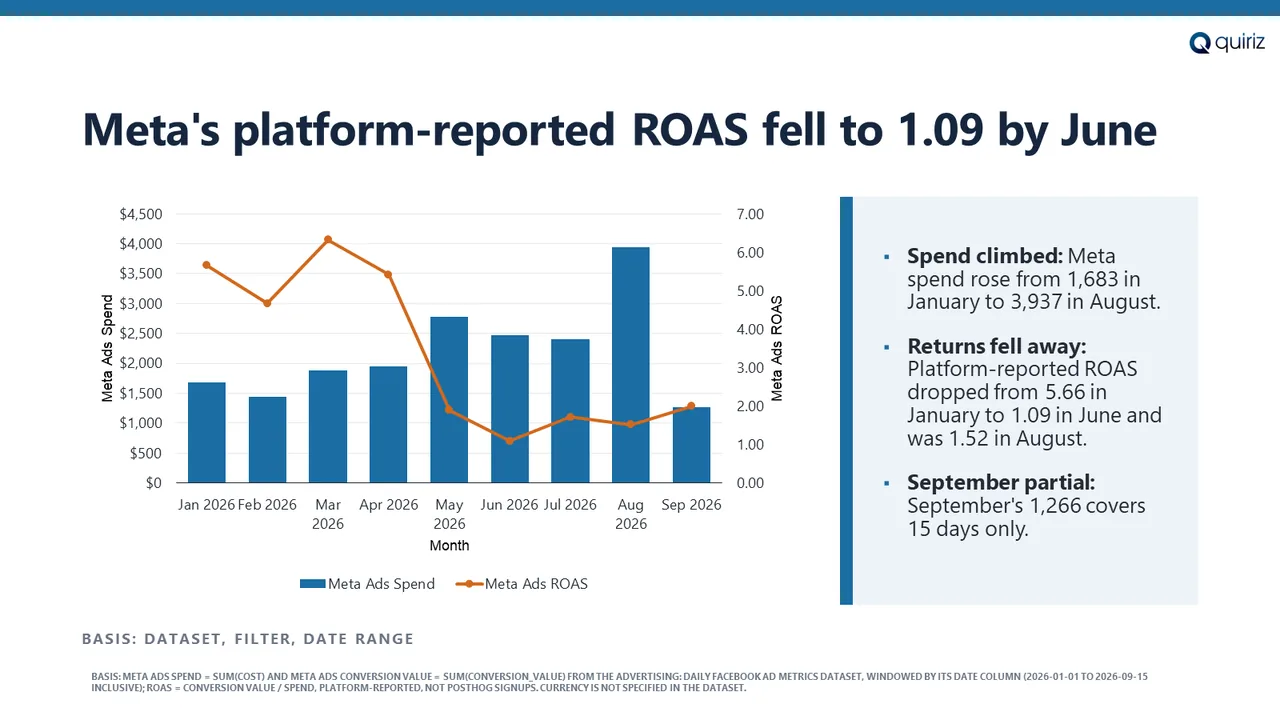
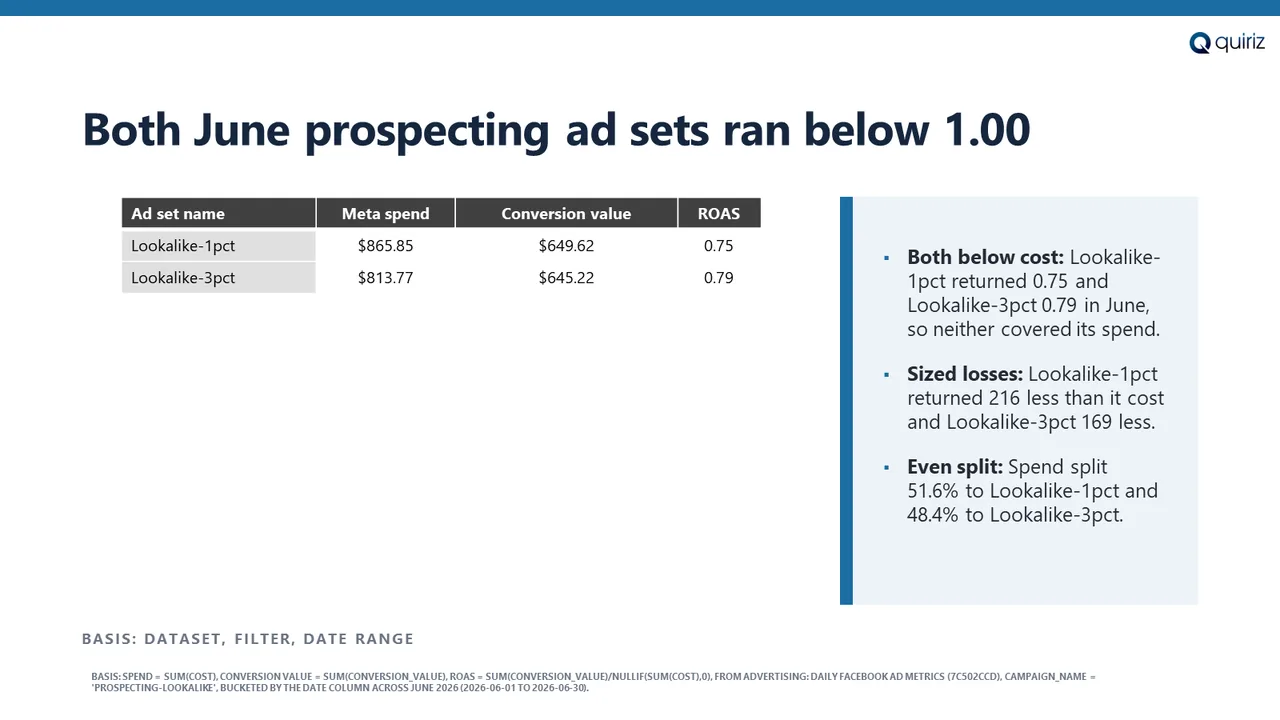
DeepSeek V4.1 Flash built a 14-slide board review for 30 cents in 8.2 minutes. It found that Meta prospecting stopped covering its own cost from May, with both ad sets below 1.00 in June, which four of the five other models did not. Its four recommendations are sequenced by month. It found 5 of 8 story points in our checklist, third behind Opus and Argon, at a tenth of Argon’s price.
The run
| Billed cost | $0.30 ($0.20 answers, $0.05 plan, 2 cents writing and critique) |
| Build time | 8.2 minutes |
| Analysis calls | 67 (the most of seven), reading 2.7 million input tokens |
| Slides | 14 content slides |
| Stories found | 5 of 8 (see the checklist) |
What it found
- The ad collapse, month by month. Meta return fell from 5.66 in January to 1.09 in June. It then drilled into June: Lookalike-1pct returned 0.75 and Lookalike-3pct 0.79, together $385 less than they cost. Exactly the drill-down a board needs.
- The best and worst Google campaigns. Brand-Search returned 7.85 on 18.6% of spend, against 1.66 for PMax-Retarget.
- Where Meta should spend instead. Retargeting-DPA returned 4.26 against prospecting’s 2.58.
- Wholesale by region, with deals created and won side by side and a clear note on which date each is counted by.
What it left out
The Southeast shows up as the region with the fewest wins, but the deck does not reach the 20% win rate or the reason behind it: half of the Southeast’s lost deals were lost on price.
Its recommendations
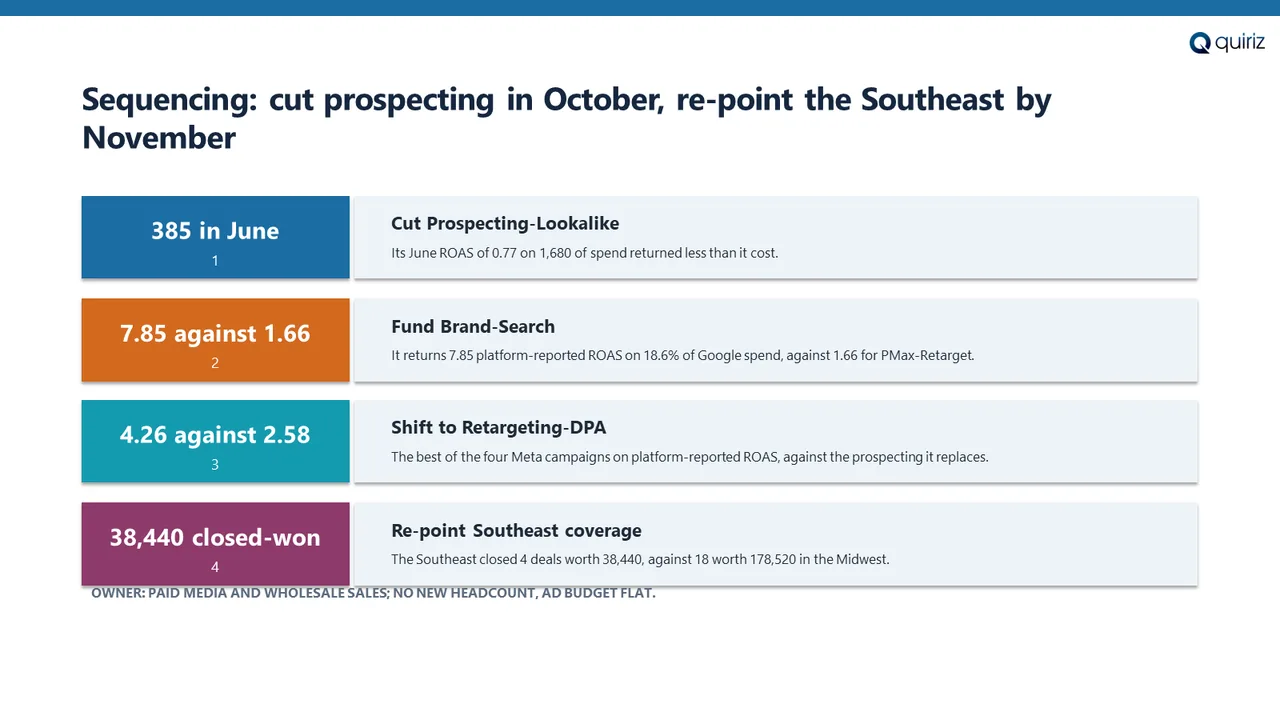
Four, sequenced by month: cut Prospecting-Lookalike in October (June return 0.77 on $1,680); fund Brand-Search (7.85 against PMax’s 1.66); shift Meta budget to Retargeting-DPA (4.26 against 2.58); and re-point Southeast sales coverage. All four act on real findings, with an owner line and a flat budget. Opus 5.5 and Argon did as well here; Opus went one step further by tying the Southeast move to pricing.
The slide notes
Specific and useful: “Prospecting-Lookalike took 67.7% of May spend and 68.1% in June” is the kind of note that makes a chart readable, and its drill-down slides say what the parent slide could not.
Verdict
The best value in the test. For 30 cents it found the most expensive problem in the ad data and said what to do about it. Compare it with GPT-6.1 Sol, which found less at seven times the price, and with GPT-6 Luna, which cost half as much and did not look at returns.
More from this test
- All models, one board deck: the full results
- What an AI board deck really costs, by model and by step
- DeepSeek V4.1 Flash · GPT-6.1 Sol · GPT-6 Luna · Gemini 3.8 Flash
- GPT-6 Luna vs Sol · DeepSeek vs GPT-6.1 Sol
Build a board deck from your own data
Describe the deck in PowerPoint and see the source of every figure. Free to start.
Try Quiriz free →